Why managing stress, building strength, and prioritizing recovery matter for healthy aging especially during the Thanksgiving season.
A healthier holiday season starts with how you move
The holidays are meant for connection and gratitude. But Thanksgiving preparations, travel, family commitments, and year-end deadlines can leave us sleeping less, moving less, and carrying more tension than usual.
Stress is not just a feeling. Your brain, hormones, muscles, and cardiovascular system all take part in the stress response. Pilates offers a structured opportunity to move with purpose, pay attention to your breathing, and build strength even when life feels busy.
At Plyo Pilates Performance (P3) in Redondo Beach, our goal is bigger than a good workout. We coach movement quality, strength, recovery, and progression so you can keep doing what you love outside the studio.
And that is where longevity comes in. Longevity is not only about lifespan, how long you live, but also healthspan: how many of those years you can remain healthy, active, and independent. Pilates cannot stop aging or guarantee a longer life. It can, however, help develop physical abilities that matter for healthy aging.
1. Your body is under stress. Your hormones feel it.
What stress actually does
When you encounter a challenge, the brain activates the hypothalamic-pituitary-adrenal (HPA) axis. This system helps regulate cortisol, a hormone involved in energy availability, alertness, and adaptation to stress. Cortisol is essential, not a toxin to eliminate, and it normally changes across the day.
As Russell and Lightman explain in their review of the human stress response (2019), ongoing stress can affect the regulation of this system. That is one reason persistent stress may coincide with sleep difficulties, fatigue, and challenges with recovery.
Where Pilates fits
Pilates combines resistance-based movement with concentration, alignment, coordination, and deliberate breathing. You work hard enough to develop strength while practicing how to stay organized and controlled through effort. For many people, this dedicated time to move can be a practical tool for stress management.
A small 2021 study of 27 women ages 60–65 found improvements in several measures of physical and psychological function after eight weeks of Pilates, along with changes in daily cortisol and DHEA-S patterns. Importantly, average cortisol increased in the Pilates group; the study does not support a blanket claim that Pilates “lowers cortisol” or “balances hormones.”
The holiday takeaway: You cannot control every travel delay or family obligation. But you can create a consistent time to move, breathe, and respond to a physical challenge with intention. Supporting stress management is one piece of taking care of your health over time.
2. Train your body. Support your nervous system.
Challenge and recovery are both necessary
Your autonomic nervous system helps regulate heart rate, breathing, and other automatic functions. Its sympathetic branch supports activation and readiness for action; its parasympathetic branch contributes to rest and restorative functions. Neither is “bad.” A healthy response involves adapting to what the moment requires and recovering afterward.
When schedules become hectic, you may notice shallow breathing, elevated tension around the neck and shoulders, or difficulty switching your attention away from the next task. Pilates asks you to focus on your present movement: stabilize the pelvis, articulate the spine, control the resistance, and match breath to effort.
What the studies suggest
In a 2021 randomized controlled trial of 54 men, 12 weeks of Pilates improved several heart-rate variability (HRV) measurements compared with the control condition. HRV provides information about aspects of autonomic regulation; it is not a direct measurement of feeling calm and does not prove that every Pilates class switches the body into “rest-and-digest” mode.
Still, the findings provide an interesting physiological reason to study how Pilates training affects adaptation to physical demands. The practical benefit may be simpler: for the length of a class, your attention is on deliberate movement rather than the holiday to-do list.
The longevity connection
Aging well involves more than stronger muscles. Movement also requires balance, coordination, body awareness, and the ability to respond to changing conditions. Pilates challenges these abilities through controlled, progressively demanding exercises. Practicing movement quality today can help you work toward confidence in everyday activities for years to come.
3. Stronger body. Better recovery. More resilience.
Recovery is part of progress
Building strength is only one side of physical performance. Sleep, rest, and a manageable training routine help make that hard work sustainable. Thanksgiving travel, late evenings, and changes to your usual schedule can make regular recovery habits harder to maintain.
A 2024 systematic review and network meta-analysis of 27 randomized trials found that several mind-body exercise approaches, including Pilates, improved self-reported sleep quality compared with no-exercise controls. Pilates ranked favorably in this analysis, although the size of benefit and study quality varied.
Pilates can be an approachable way to keep moving during a busy season without treating every workout as an all-out test. Depending on the class and your needs, it can be an opportunity to build strength, restore comfortable movement, or focus on control and mobility.
Why this matters for healthy aging
A 2024 systematic review and meta-analysis of 39 studies involving 1,770 older adults found evidence that Pilates can improve static and dynamic balance. However, that review did not establish that Pilates reduces actual falls or fear of falling, and the certainty of evidence varied.
An earlier 2021 meta-analysis of 39 studies also reported improvements in balance, strength, flexibility, and functional performance compared with non-exercise controls. Together, these findings support Pilates as one option for training physical qualities that help preserve independence as we age.
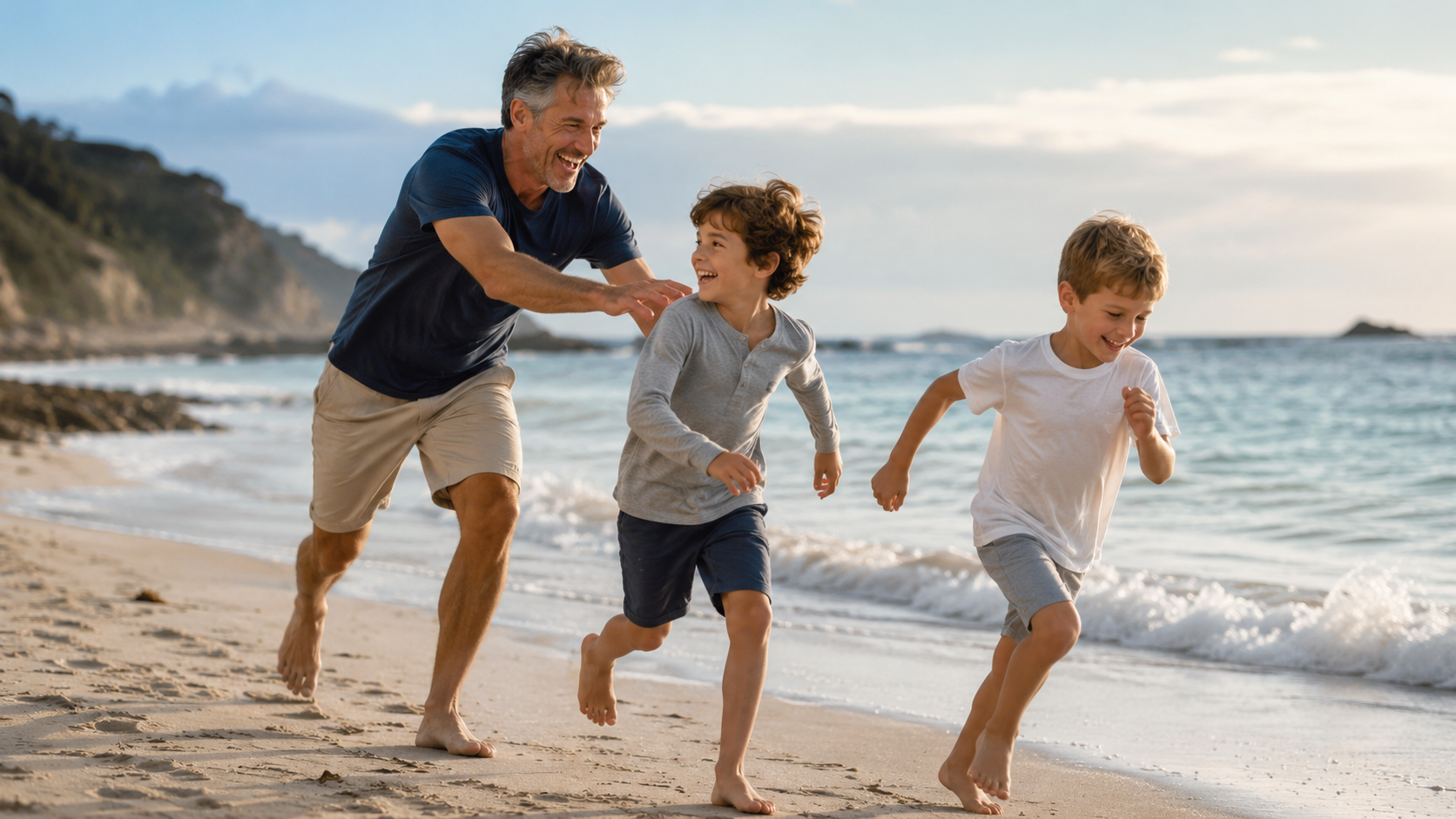
Consider the ordinary moments that matter: lifting luggage overhead, carrying Thanksgiving groceries, getting down on the floor with children, walking along the beach, or returning to pickleball and volleyball. You want the strength, range of motion, and movement confidence to participate, not simply get through the day.
A 2026 review of Pilates and psychological outcomes also reported promising findings for quality of life and self-esteem, while emphasizing substantial differences between studies. That is encouraging, but it is not evidence that Pilates cures anxiety, fatigue, or hormonal conditions.
This Thanksgiving, give thanks to the body that carries you through life
Your body has carried you through work, family commitments, travel, workouts, and countless moments you probably take for granted. Gratitude can include giving it the movement, attention, and recovery it needs.
Strength is not just about what you can do today. Healthy longevity is about protecting your ability to move, participate, and enjoy life tomorrow.
At P3, our coaching emphasizes strength, control, recovery, and steady progression. Whether you are building confidence in Beginner Flow, challenging yourself in Athletic Reformer, or making room for recovery in Stretch + Reset, the goal is the same: movement that supports your life outside the studio.
Train for today. Build strength for tomorrow. Move for longevity.
This Thanksgiving, make time to take care of the body that takes care of you. Explore classes at Plyo Pilates Performance in Redondo Beach and find the right place to begin.
Research & references
- Russell, G., & Lightman, S. (2019). The human stress response. Nature Reviews Endocrinology. https://doi.org/10.1038/s41574-019-0228-0
- The effect of Pilates training on hormonal and psychophysical function in older women. (2021). https://pubmed.ncbi.nlm.nih.gov/33555671/
- Cavina, A. P. S., et al. (2021). Effects of 12-week Pilates training program on cardiac autonomic modulation: A randomized controlled clinical trial. Journal of Comparative Effectiveness Research. https://doi.org/10.2217/cer-2021-0195
- Xie, W., et al. (2024). The optimal exercise intervention for sleep quality in adults: A systematic review and network meta-analysis. Preventive Medicine. https://doi.org/10.1016/j.ypmed.2024.107955
- de Campos Júnior, J. F., et al. (2024). Effects of Pilates exercises on postural balance and reduced risk of falls in older adults: A systematic review and meta-analysis. Complementary Therapies in Clinical Practice. https://doi.org/10.1016/j.ctcp.2024.101888
- Pilates improves physical performance and decreases risk of falls in older adults: A systematic review and meta-analysis. (2021). https://pubmed.ncbi.nlm.nih.gov/34332493/
- Tsartsapakis, I., et al. (2026). Effects of Pilates-based exercise on mental health, psychological well-being, and quality of life: A systematic review and meta-analysis. Sports. https://doi.org/10.3390/sports14050171
Website publishing notes (not part of the public article)
SEO title: Pilates for Longevity: Stress, Hormones & Nervous System Health
Suggested URL slug: /blog/pilates-longevity-stress-nervous-system
Meta description: Discover how Pilates supports stress management, nervous system function, better sleep, strength, and healthy aging this holiday season at P3 in Redondo Beach.
Suggested internal links: Class schedule; Stretch + Reset; Athletic Reformer; longevity resources; class descriptions.
Editorial note: Avoid claims that Pilates balances reproductive hormones, treats endocrine disorders, prevents falls, or extends lifespan. The evidence discussed here supports more specific outcomes, including movement capacity, balance, stress-related measures, and sleep quality.