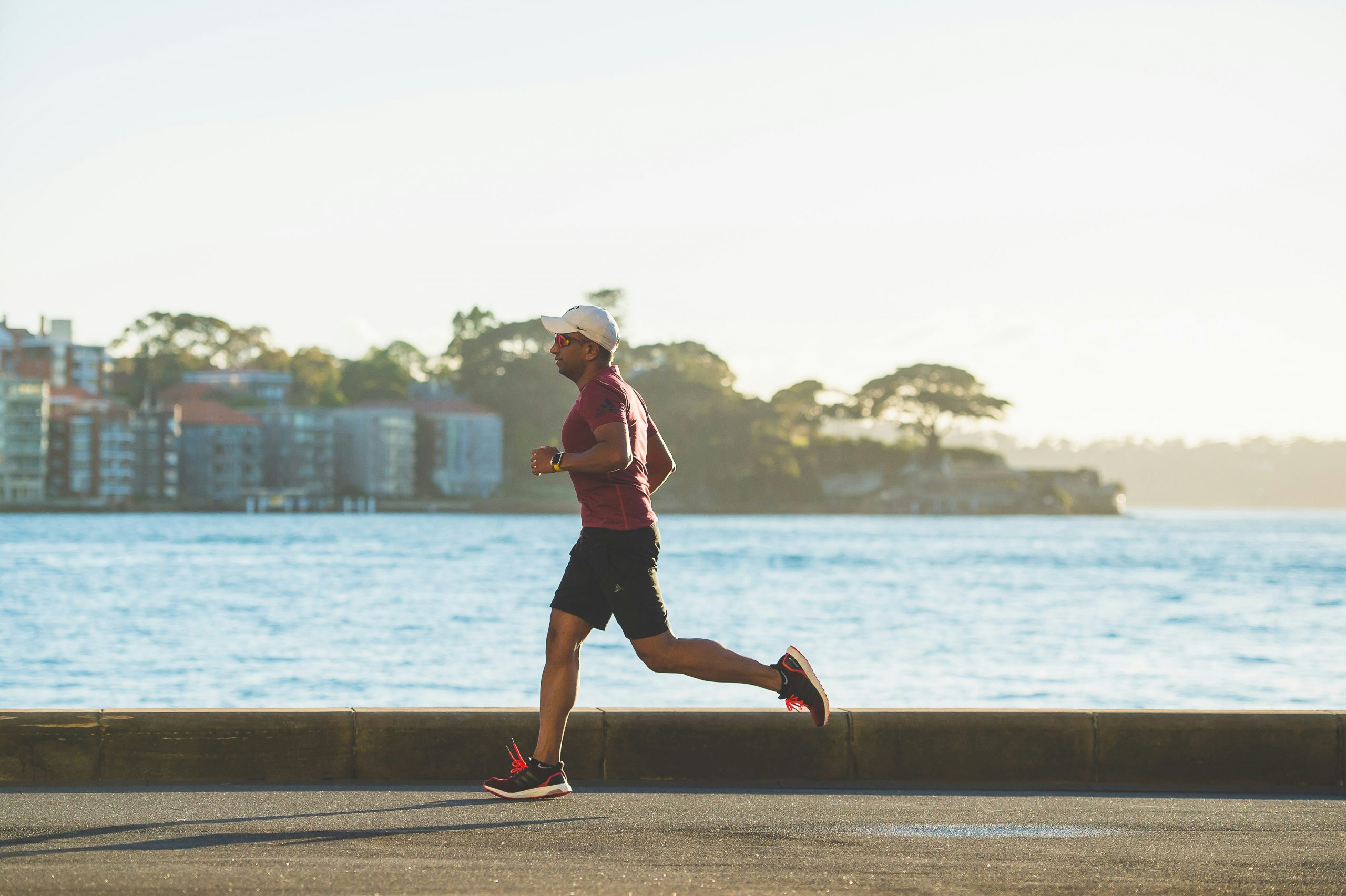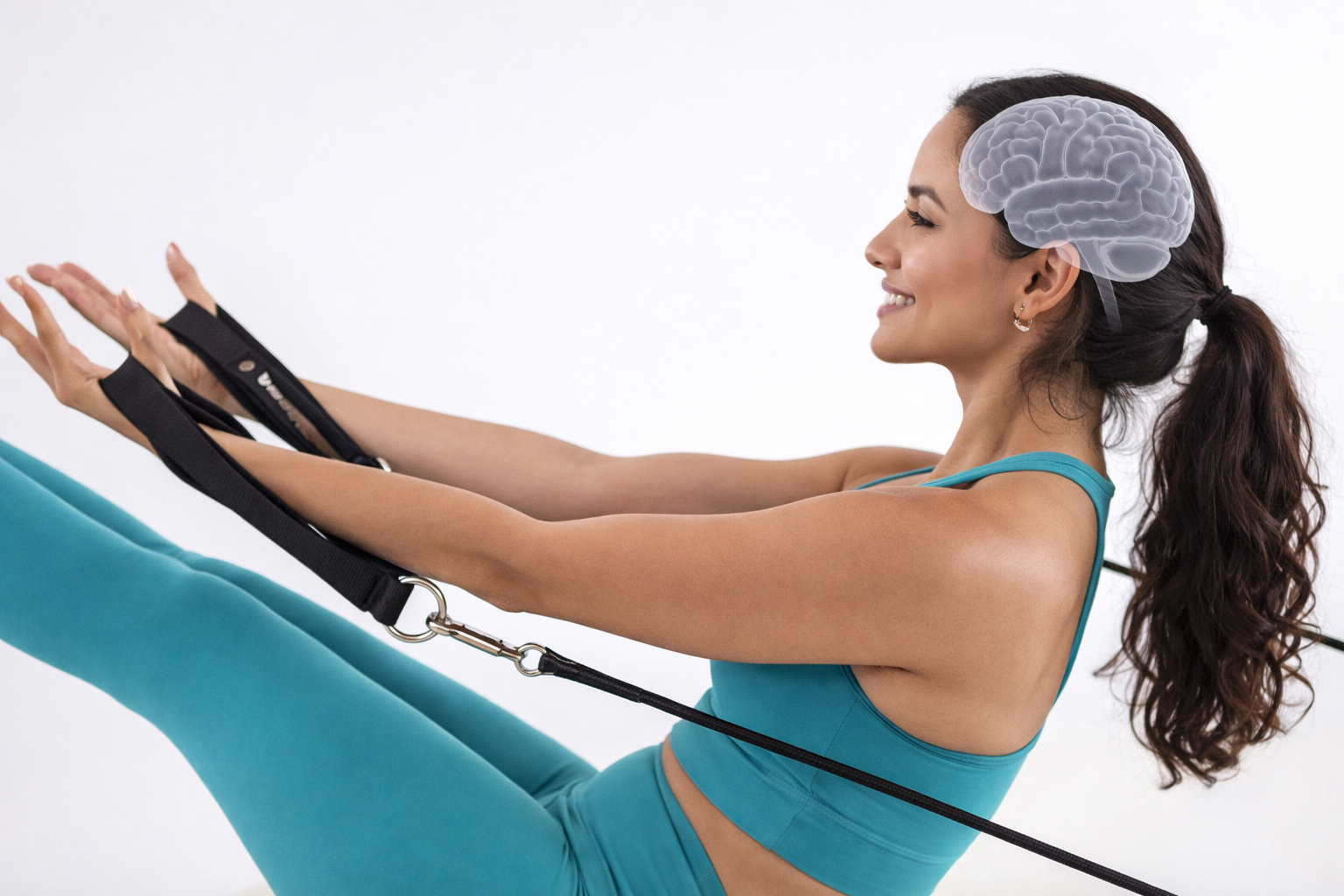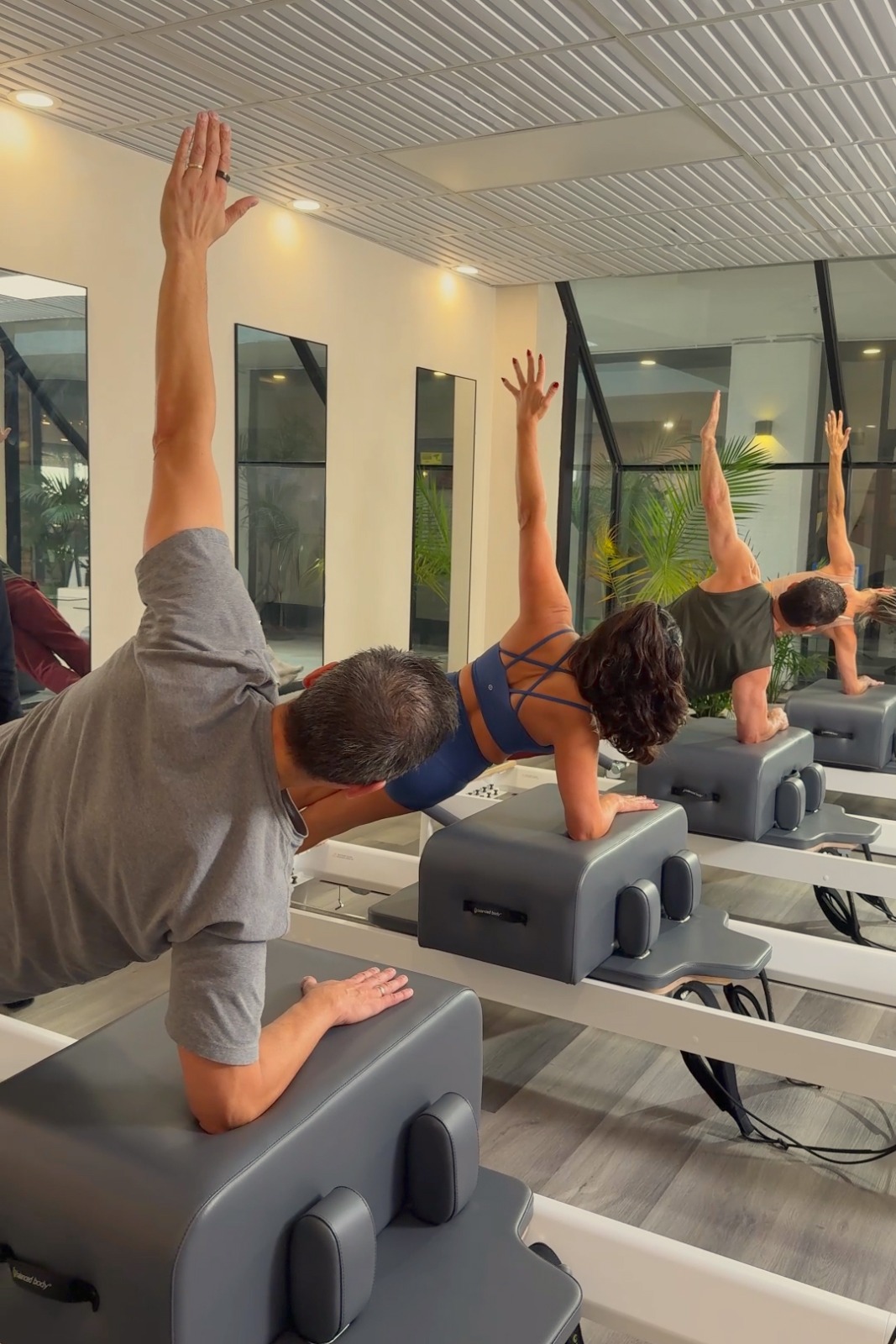
Pilates for runners has become an increasingly popular cross-training strategy for improving performance, enhancing stride efficiency, and reducing injury risk. While running builds cardiovascular endurance, it often reinforces repetitive movement patterns that can lead to muscular imbalances and overuse injuries. Pilates addresses these gaps by focusing on core stability, hip control, posture, and movement precision.
Running is primarily a single-plane activity. Over time, repetitive loading without adequate strength and control can contribute to inefficient mechanics such as pelvic instability, inward knee collapse, and excessive trunk rotation. These compensations increase energy cost and are commonly associated with injuries such as iliotibial band syndrome, plantar fasciitis, and low back pain.
Research supports the use of Pilates for runners seeking improved performance. A randomized controlled trial found that a 12-week Pilates program improved 5 km running performance, reduced metabolic cost, and enhanced trunk muscle activation patterns in trained runners. These findings suggest that Pilates improves neuromuscular efficiency rather than simply increasing strength.
Pilates also positively influences lower limb alignment and joint control. Studies examining dynamic knee valgus have shown improvements following Pilates-based training, indicating better hip and knee stability during movement. Improved alignment reduces joint stress and may lower the risk of common running-related injuries.
One of the primary benefits of Pilates for runners is improved core stability. A stable core allows for better force transfer between the lower body and trunk, minimizing wasted motion and supporting a smoother, more efficient stride. Strong deep core muscles help runners maintain neutral pelvic positioning even as fatigue sets in.
Pilates strengthens the hips and gluteal muscles that are essential for controlling the stance phase of running. Improved hip stability limits excessive frontal-plane movement and reduces compensatory stress on the knees and lower back. These adaptations are critical for maintaining proper alignment over long distances.
Flexibility and strength are trained simultaneously in Pilates. Rather than stretching muscles in isolation, Pilates develops controlled mobility through full ranges of motion. This balanced approach helps runners increase stride length without sacrificing stability or control.
Breath control and posture are also emphasized in Pilates training. Coordinating breath with movement supports efficient oxygen exchange and helps runners maintain an upright posture. This can reduce unnecessary tension and delay fatigue during longer runs.
Integrating Pilates into a running program does not require a large time commitment. Two to three sessions per week can improve movement quality, strength, and coordination. Pilates complements traditional strength training by refining control and balance while resistance training builds power.
In conclusion, Pilates for runners is a research-supported method for enhancing stride efficiency, improving neuromuscular control, and reducing injury risk. By addressing the core, hips, and postural systems that support running mechanics, Pilates helps runners move more efficiently and train with greater longevity.
References
- Ran, Y. et al. (2018). Clinical and biomechanical influence of Pilates training on running performance. PMC.
- Smith, J. et al. (2009). Effect of Pilates training on lower limb alignment. PMC.
- Jones, A. et al. Effect of core stability training using Pilates. ResearchGate.
- Opti Sports Physio. Pilates for Runners.
- Central Performance. Can Pilates help your running?
- Benefits of Pilates for Running.
- My GC Physio. Pilates vs Strength Training for Runners.